
The cost of a private jet flight depends primarily on the aircraft you need, how long you fly, where the aircraft is located, and the specific requirements of your trip. As a general planning range, private jet charter can cost approximately $4,000 to $20,000+ per flight hour, with smaller aircraft typically at the lower end and heavy or long-range jets at the higher end.
That means a two-hour private jet flight might cost roughly $8,000 to $40,000+, while a five-hour flight could range from approximately $20,000 to $100,000+.
Those numbers are useful for estimating cost, but they are not quotes. Aircraft positioning, fuel, airport fees, taxes, crew expenses, availability, weather, deicing, international requirements, and other trip-specific costs can all affect what you ultimately pay.
The better question is not simply, “How much does a private jet cost per hour?” It is, “What should my particular trip cost on the right aircraft?”
Private Jet Charter Cost by Aircraft Type
Aircraft category is one of the biggest factors affecting private jet charter prices. A short regional trip for a few passengers may be efficiently handled by a light or midsize jet, while a transcontinental or international mission may require a heavy or ultra-long-range aircraft.
The following figures can be used as general planning estimates:
| Aircraft Category | Example Aircraft | Approximate Retail Charter Cost |
|---|---|---|
| Very Light Jet | HondaJet / Citation M2 | $4,000–$5,000/hr* |
| Light Jet | Phenom 300 / Citation CJ3 | $5,000–$6,500/hr* |
| Midsize Jet | Lear 60 | $7,000–$9,000/hr* |
| Super-Midsize Jet | Challenger 350 / Citation Longitude | $9,000–$12,000/hr* |
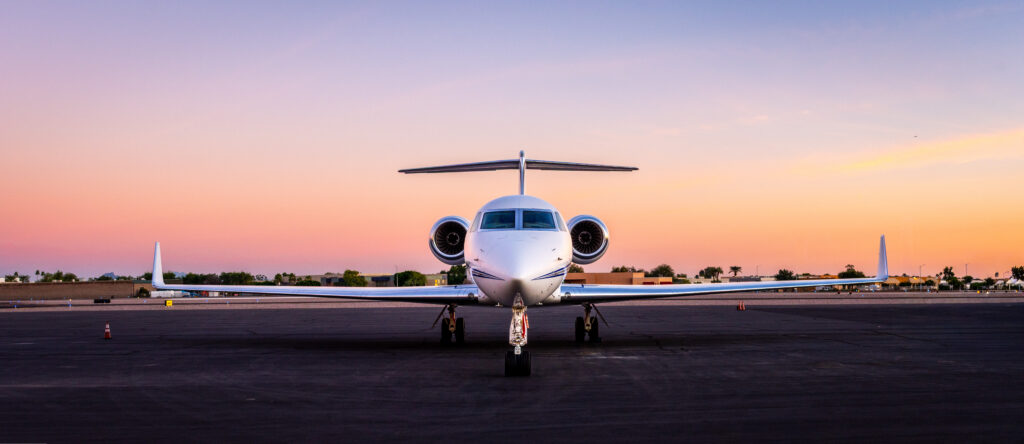
| Heavy Jet | Gulfstream V | $14,000–$17,000/hr* |
| Ultra-Long-Range Jet | G550 / Global-class aircraft | $16,000–$20,000+/hr* |
*General planning estimates rather than quotes or published Paradise Jets rates. Actual charter pricing varies by aircraft, operator, route, availability, fuel, airports, market conditions, and trip requirements.
For a real-world reference point, Paradise Jets currently publishes average retail charter pricing of $9,376 per hour for a Lear 60 midsize jet and $18,652 per hour for a Gulfstream V heavy jet.
The objective should not necessarily be to choose the aircraft with the lowest hourly rate. It should be to select the most efficient aircraft capable of appropriately performing the mission.
A larger aircraft may mean paying for range or capacity you do not need. But selecting a less capable aircraft can also increase total trip cost if it requires a fuel stop or cannot efficiently accommodate the passengers, baggage, airport, or route.
How Much Does a Private Jet Flight Cost by Flight Time?
One of the simplest ways to estimate private jet cost is to multiply the expected flight time by an appropriate aircraft’s hourly rate.
The table below uses Paradise Jets’ published average retail charter rates for a Lear 60 midsize jet at $9,376 per hour and a Gulfstream V heavy jet at $18,652 per hour.
| Flight Time | Lear 60 Midsize Jet | Gulfstream V Heavy Jet |
|---|---|---|
| 1 hour | $9,376 | $18,652 |
| 2 hours | $18,752 | $37,304 |
| 3 hours | $28,128 | $55,956 |
| 4 hours | $37,504 | $74,608 |
| 5 hours | $46,880 | $93,260 |
| 6 hours | $56,256 | $111,912 |
| 8 hours | $75,008 | $149,216 |
| 10 hours | $93,760 | $186,520 |
These calculations are estimates based on hourly rates, not charter quotes. The actual cost of a trip may include or be affected by aircraft positioning, airport fees, taxes, crew expenses, deicing, international charges, catering, ground transportation, aircraft availability, routing, weather, and other operational requirements.
So, how much does a two-hour private jet flight cost? Using these published rates, approximately $18,752 aboard a Lear 60 or $37,304 aboard a Gulfstream V before other applicable trip costs. A three-hour flight would represent approximately $28,128 or $55,956, while five flight hours would represent approximately $46,880 or $93,260.
Watch: Private Jet Costs Beyond the Quoted Rate
Paradise Jets explains the cost variables that can be missed when a private flight is evaluated only by a headline hourly rate.
What Determines the Cost of a Private Jet Flight?
Flight time matters, but it is only one part of a private jet quote. Two flights covering approximately the same distance can have materially different costs.
Aircraft Type
Larger and more capable aircraft generally cost more to operate. Passenger count, baggage, range, airport performance, cabin requirements, and the ability to complete the mission nonstop should all factor into aircraft selection.
Aircraft Positioning
The aircraft you charter may not already be sitting at your departure airport. Moving an aircraft into position before your flight or repositioning it afterward can affect total trip economics.
Fuel
Fuel is a major aircraft operating expense, and both fuel prices and fuel consumption vary. When comparing charter programs, it is important to understand whether fuel is included in the advertised rate or calculated separately.
Airport Selection
The airport you choose can affect landing fees, parking, handling, fuel, ground transportation, and even the amount of time the trip takes.
For example, Paradise Jets notes that choosing Hawthorne Airport instead of Los Angeles International can potentially reduce landing fees, parking expenses, fuel costs, and ground handling while creating a faster overall travel experience.
Aircraft Availability and Timing
Availability can affect charter pricing, particularly for short-notice trips. The location of available aircraft can also affect positioning costs.
Trip-Specific Expenses
Taxes, deicing, international handling, permits, catering, crew expenses, ground transportation, and other mission-specific requirements may also affect the final price.
How Much Does a Private Jet Round Trip Cost?
A private jet round trip is not necessarily calculated by simply doubling the cost of a one-way flight.
The economics depend on what happens to the aircraft between your outbound and return trips. If you are returning quickly, keeping the same aircraft and crew with the trip may make sense. For a longer stay, having an aircraft remain idle may be inefficient, and repositioning or using a different aircraft for the return flight could produce different economics.
Total flight time, length of stay, aircraft availability, positioning, crew requirements, airport expenses, and scheduling all influence the final price.
This is why an actual itinerary provides a much better private jet cost estimate than an hourly rate alone.
Hourly Rate vs. Total Private Jet Trip Cost
One of the easiest mistakes to make when comparing private aviation options is focusing entirely on the advertised hourly rate.
An hourly rate tells you what an hour costs under a particular pricing structure. It does not necessarily tell you what your complete trip will cost.
A better comparison considers the aircraft rate along with fuel, airports, positioning, taxes, and other applicable trip expenses.
That becomes even more important once you begin flying privately on a recurring basis, because at that point another variable enters the equation: how you purchase the flying itself.
How Do I Reduce the Cost of Flying Private?
There are several ways to improve the economics of private flying without simply searching for the lowest advertised hourly rate.
Choosing the appropriate aircraft can prevent you from paying for unnecessary range or cabin capacity. Selecting more efficient airports can reduce fees and ground transportation time. Thoughtful scheduling may reduce positioning or other trip-specific costs.
For aircraft owners, third-party charter activity may help offset a portion of fixed operating costs, although it should not be assumed to cover the total cost of ownership.
But for someone who flies privately on a recurring basis, one of the biggest opportunities may be changing how the flying is purchased.
Instead of buying every flight at retail, recurring private flyers can evaluate block charter. At greater or more consistent utilization, fractional ownership may also deserve consideration.
Block Charter
Block charter allows a traveler to commit funds in advance in exchange for an established pricing structure rather than purchasing every trip independently at retail.
Paradise Jets’ JetLife private jet charter program offers block charter for recurring private flyers, with preferred hourly rates and priority fleet access without requiring an ownership-level capital commitment. Paradise Jets operates its charter flights under its own FAA Part 135 Air Carrier Certificate.
The current published pricing illustrates how changing the purchasing structure can affect hourly cost:
| Aircraft | Average Retail Charter | $250K JetLife | $500K JetLife |
|---|---|---|---|
| Lear 60 — Midsize | $9,376/hr | $8,703/hr | $7,386/hr |
| Gulfstream V — Heavy | $18,652/hr | $17,497/hr | $14,929/hr |
JetLife’s fuel-inclusive estimates assume an average fuel price of approximately $5.00 per gallon. Paradise Jets also states that its block tiers have no hidden repositioning charges, access fees, or last-minute pricing shifts. Actual rates and trip costs can still vary based on applicable trip expenses and operating requirements.
The important lesson is not that block charter is automatically better than retail charter. It is that buying the same type of private flying differently can materially change the economics.
For an occasional private flyer, retail charter may provide exactly the flexibility needed. As utilization becomes more consistent, block charter may deserve a closer look.
Fractional Jet Ownership
At more consistent utilization, the economics may change again.
Fractional jet ownership allows a client to own an interest in an aircraft rather than purchasing individual flights. That introduces acquisition capital into the equation, but it also creates a fundamentally different operating and access structure.
Paradise Jets’ JetShare fractional ownership program provides 60 annual flight hours per ownership interest, with no monthly management fees, no domestic repositioning fees, published owner rates, an annual buy-back mechanism for up to 35% of allotted hours, and a defined exit structure.
Current JetShare economics illustrate the difference:
| JetShare Aircraft | Published Owner Rate | Estimated Owner Rate With Fuel |
|---|---|---|
| Lear 60/60XR | $4,809/hr | $6,243/hr |
| Gulfstream V/550 | $9,681/hr | $12,699/hr |
These are fractional-owner economics, not charter rates. Fractional ownership requires capital, so comparing an estimated $6,243 all-in owner rate with an $9,376 retail charter rate and simply declaring fractional ownership cheaper would be misleading.
The proper comparison includes acquisition capital, operating expenses, access, unused hours, potential tax considerations, flexibility, and eventual exit value.
If you’re considering ownership, our fractional jet ownership cost guide explains those economics in greater detail.
Retail Charter vs. Block Charter vs. Fractional Ownership
There is no universally cheapest way to fly private because each structure solves a different problem.
| Structure | Generally Worth Considering When | Primary Question |
|---|---|---|
| Retail Charter | Private travel is occasional or highly variable | What does this particular trip cost? |
| Block Charter | Private flying becomes more recurring | Can structured purchasing improve my cost and predictability? |
| Fractional Ownership | Utilization and ownership economics warrant consideration | Does committing capital improve my total aviation economics and access? |
| Whole Aircraft Ownership | Control, utilization, or mission requirements justify a dedicated aircraft | Does full ownership justify its total lifecycle cost? |
These should not be treated as rigid flight-hour thresholds.
Two people who each fly privately 50 hours per year can have completely different optimal strategies because they fly different routes, require different aircraft, value access differently, and have different capital, business, tax, and flexibility considerations.
That is why the right analysis starts with how you actually travel rather than a predetermined product.
Use a Private Jet Cost Calculator Based on How You Actually Fly
A generic private jet cost estimator can help determine whether a flight might cost $15,000 or $50,000. It cannot tell you whether you’re purchasing private aviation in the most appropriate way.
Paradise Jets’ Aviation Strategy Assessment includes a Private Aviation Cost Calculator designed to estimate the cost of flying private based on how you actually travel. It evaluates how you fly, where you’re headed, and what you’re trying to accomplish to help determine whether private jet charter, fractional ownership, whole aircraft ownership, or a combination may be worth considering.
The assessment also considers travel profile, capital priorities, tax objectives, flexibility requirements, and long-term goals.
That is a more useful question than simply asking which provider has the lowest hourly rate.
USE THE PRIVATE AVIATION COST CALCULATOR →
Frequently Asked Questions About Private Jet Costs
How much does a private jet cost per hour?
Private jet charter can broadly range from approximately $4,000 to $20,000+ per hour, depending on aircraft category and trip requirements. As real-world examples, Paradise Jets currently publishes average retail charter rates of $9,376 per hour for a Lear 60 midsize jet and $18,652 per hour for a Gulfstream V heavy jet.
How much does a 2-hour private jet flight cost?
A two-hour private jet flight might broadly cost approximately $8,000 to $40,000+, depending on the aircraft. At Paradise Jets’ published average retail rates, two hours represent approximately $18,752 aboard a Lear 60 or $37,304 aboard a Gulfstream V, before other applicable trip costs.
How much does a 3-hour private jet flight cost?
A three-hour private jet flight might broadly cost approximately $12,000 to $60,000+. At the published Paradise Jets retail rates, three hours represent approximately $28,128 aboard a Lear 60 or $55,956 aboard a Gulfstream V, based solely on hourly rate.
How much does a 5-hour private jet flight cost?
A five-hour private jet flight might broadly cost approximately $20,000 to $100,000+. At the published Paradise Jets retail rates, five hours represent approximately $46,880 aboard a Lear 60 or $93,260 aboard a Gulfstream V, before other applicable trip costs.
How can I reduce the cost of flying private?
Selecting the appropriate aircraft, choosing more efficient airports, reducing unnecessary positioning, and planning trips intelligently can all affect private jet costs. Recurring private flyers may also benefit from comparing retail charter with block charter, while higher or more consistent utilization may make fractional ownership worth evaluating.
Is block charter cheaper than regular private jet charter?
It can be. Paradise Jets currently publishes lower JetLife hourly rates at qualifying $250,000 and $500,000 deposit levels than its average retail charter rates for both the Lear 60 and Gulfstream V. Whether block charter provides better total economics depends on how often you fly, the aircraft you need, your routes, and the terms of the program.
Is fractional jet ownership cheaper than charter?
It can be, but comparing hourly rates alone is incomplete. Fractional ownership requires capital and introduces operating expenses, access rights, unused-hour treatment, potential tax considerations, and exit economics. Those factors need to be evaluated alongside charter costs.
What is the cheapest way to fly private?
There is no universally cheapest structure. Occasional travelers may be better served by retail charter, recurring flyers may find better economics through block charter, and fractional or whole ownership may warrant consideration as utilization and other requirements change.
Is there a private jet cost calculator I can use?
Yes. The Paradise Jets Aviation Strategy Assessment includes a Private Aviation Cost Calculator designed to estimate costs based on how you actually travel and help evaluate which private aviation structures may fit your needs.

The Paradise Jets Perspective
Knowing what a private jet flight costs is useful. Understanding why it costs that amount and whether you are purchasing private aviation in the right way is more valuable.
For an occasional flyer, the answer may be retail charter. As flying becomes more consistent, block charter may create better economics and predictability. At another level of utilization or financial need, fractional or whole aircraft ownership may deserve consideration.
Paradise Jets starts with aviation strategy because the lowest hourly rate is not necessarily the lowest total cost, and the cheapest flight is not necessarily the best aviation decision.
The right aircraft matters. The right strategy matters more.